....

🌱 April NEWS Book Club dōTERRA Oils menu close close Pricing + Promos menu Events + Programs The Virtual Studio close account_circle close book a class membership changes (613) 384-MIND (6463) [email protected] About Home New Students Schedule

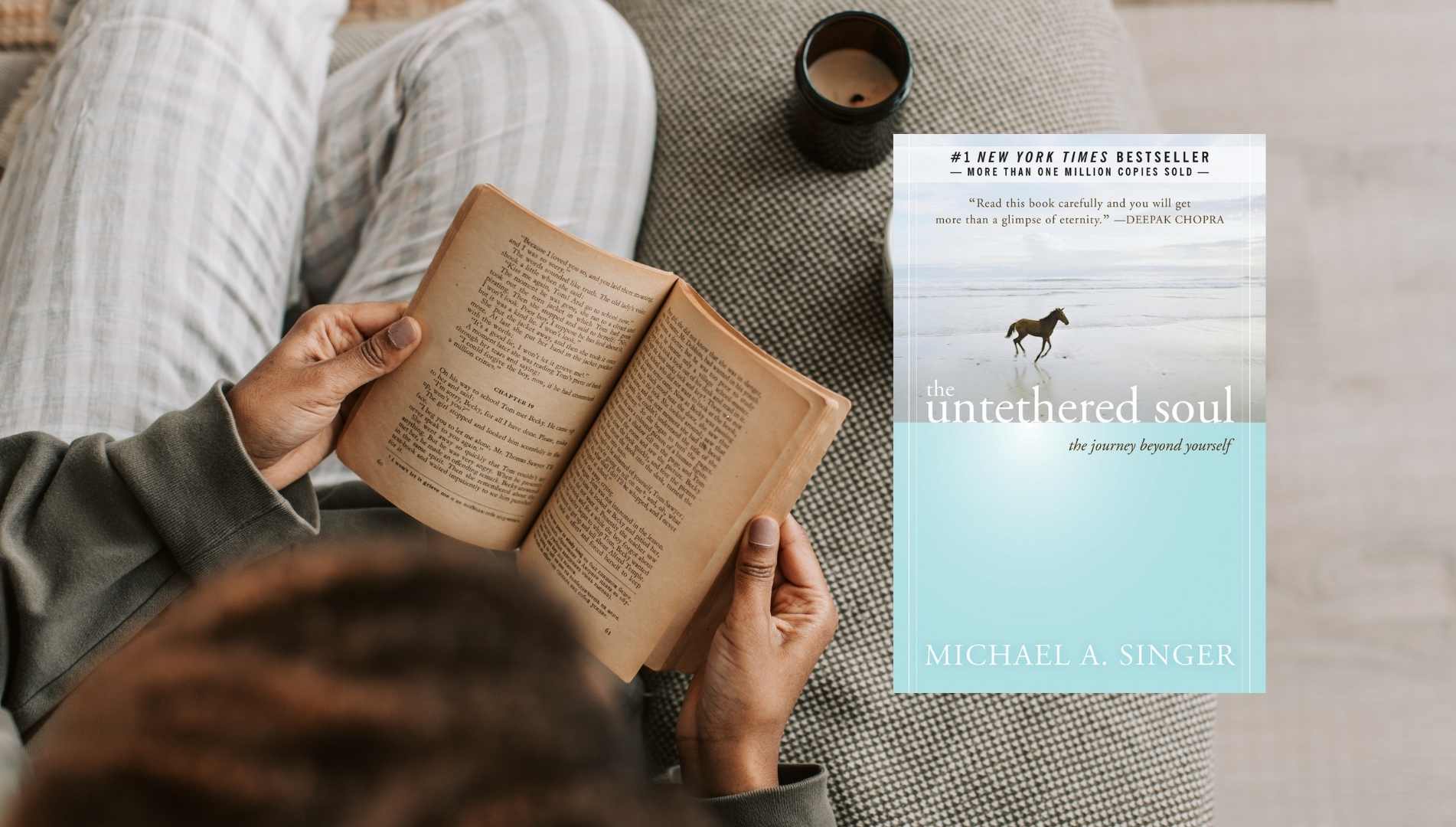
"You are not the voice of the mind march 2026 The Untethered Soul by Michael A. Singer READ MORE
Samatva Spirit Circle · March 2026

Untethered
Sundays

The Untethered Soul · Michael A. Singer
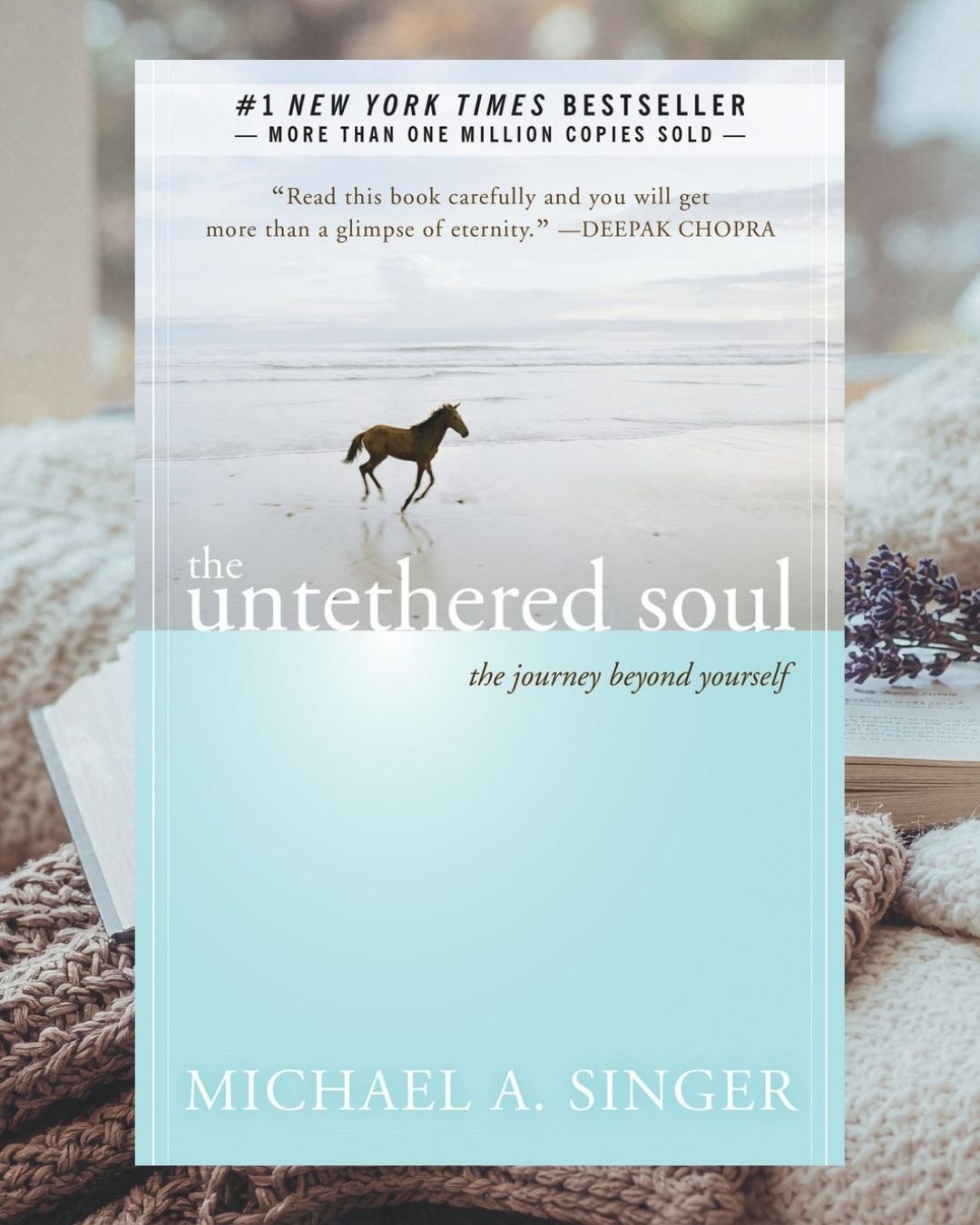
The Untethered Soul by Michael A. Singer

Welcome to Untethered Sundays — your monthly reading companion for The Untethered Soul. Open the week you're in, sit with what resonates, and let the rest find you when it's ready. 💛

Chapter 1
The Voice Inside Your Head
Singer opens by pointing at something so familiar we barely notice it — the near-constant inner monologue running in the background of everything we do. The first step isn't to stop it. It's just to hear it.

"There is nothing more important to true growth than realizing that you are not the voice of the mind."

— Michael A. Singer
  • 💭
    Reflect: When did you first notice your inner voice this week — what was it saying?
  • ✏️
    Takeaway: What's one thing from this chapter you want to carry forward?
  • 👁️
    Notice: Can you catch the voice mid-sentence today without engaging with what it's saying?
  • What stayed with you? A line, a moment, a feeling.
🧘 Teacher Tip At the start of class, try offering a moment of deliberate listening — not to music or your cues, but inward. Invite students to simply notice what the mind is already saying before they've even taken their first breath on the mat. A single cue like "What's the voice already telling you about this practice today?" can shift the entire quality of attention in the room. You don't need to resolve the voice — just name that it's there. That's the first act of witness consciousness.
Chapter 2
Your Inner Roommate
If the voice in your head belonged to a real person living with you, you'd never tolerate it. This chapter names it — the inner roommate — and gently asks why we give it so much authority over how we feel and what we do.

"You are not the voice of the mind. You are the one who hears it."

— Michael A. Singer
  • 💭
    Reflect: What does your inner roommate say most often — and whose voice does it remind you of?
  • ✏️
    Takeaway: What shifted for you when Singer used the roommate analogy?
  • 👁️
    Notice: Watch for a moment this week where your inner roommate "takes over." What triggered it?
  • What stayed with you?
🧘 Teacher & Student Tip The inner roommate shows up loudest in challenging poses — the moment a student hits discomfort, that inner critic arrives right on schedule. As a teacher, you can normalize this beautifully: "Notice if there's a voice telling you this is too hard, too long, too much. You don't have to evict it — just don't let it vote." This plants the seed that the practice isn't about silencing the mind; it's about learning not to follow every thought it offers.
Chapter 3
Who Are You?
If you can observe the voice, you are not the voice. Singer begins pointing toward something deeper — the witness, the awareness behind thought that simply watches without being swept away.

"The one who notices the voice is the real you — untouched, aware, and free."

— Michael A. Singer
  • 💭
    Reflect: Does it feel natural or strange to think of yourself as the observer rather than the thoughts you're having?
  • ✏️
    Takeaway: In your own words, how would you answer "Who are you?" after reading this chapter?
  • 👁️
    Notice: Try stepping into the observer seat for just one moment today. What do you notice from there?
  • What stayed with you?
🧘 Teacher Tip Dristi — the focused gaze — is one of yoga's most direct tools for cultivating the witness. When you cue students to soften their gaze in a balancing pose, you're inviting them into exactly what Singer describes: a point of awareness that is steady, watching, unattached to outcome. Try weaving in: "Let the eyes rest — not fixed, not wandering — just present. Notice from here." This anchors the philosophical into the physical in a single breath.
Chapter 4
The Lucid Self
Consciousness itself is the real "you" — not your name, your roles, or your story. Singer calls this the seat of awareness: always present, always clear, never disturbed by what passes through it.

"The lucid self is the awareness that watches everything — never disturbed, never lost."

— Michael A. Singer
  • 💭
    Reflect: Have you ever had a moment — even briefly — of feeling like pure, quiet awareness? What was it like?
  • ✏️
    Takeaway: What's the difference between being consciousness and having thoughts?
  • 👁️
    Notice: Throughout your day, can you find the place that's watching everything — even when everything is busy?
  • What stayed with you?
🧘 Teacher Tip In savasana, the lucid self is closer than anywhere else on the mat. Guide students toward it not by telling them to relax, but by pointing at the awareness itself: "Notice that you are aware of your breath — and then notice the one who is noticing." This double pointing is a direct transmission of Vedantic inquiry — pure consciousness recognizing itself. Even thirty seconds of this at the end of class can leave students with something they didn't arrive with.
Chapter 5
Infinite Energy
The heart has its own energy, and it is naturally abundant. What blocks it isn't life itself — it's our reactions to life. Singer introduces the idea that closing the heart is a choice, even when it doesn't feel like one.

"The only reason you don't feel life's energy is because you block it with stored pain."

— Michael A. Singer
  • 💭
    Reflect: What kinds of experiences tend to close your heart? Are there patterns you recognize?
  • ✏️
    Takeaway: What does "infinite energy" mean to you in the context of how you live and teach?
  • 👁️
    Notice: Pay attention this week to when your energy feels expansive vs. contracted. What's happening around you in those moments?
  • What stayed with you?
🧘 Teacher Tip Prana — life force energy — is the physical language of everything Singer describes here. When you teach pranayama or even just a conscious inhale, you're inviting students to experience their own energetic capacity firsthand. Try making this explicit: "On this inhale, feel the body expand — not just the lungs, but the whole energy field. This is what's available to you when nothing is blocked." Students who intellectually understand energy often need permission to actually feel it. Give them that permission freely.
🔭 Looking Ahead — Week 2
Chapters 6–10 | The Heart, The Thorn & Stealing Freedom
Next week Singer moves into the territory of the heart — how it opens, how it closes, and why we've built such elaborate systems to protect it. He'll introduce one of the most memorable images in the whole book: the inner thorn. As you move through your week, start noticing the places where you flinch, guard, or pull back. That awareness is going to make Week 2 land differently. 👀
Chapter 6
The Secrets of The Spiritual Heart
The heart is the center of our energetic being. When energy flows freely through it, we feel love, openness, and joy. When we block it — through protection, fear, or resistance — we lose access to ourselves.

"If you close your heart to protect yourself from life, you are actually closing it to life itself."

— Michael A. Singer
  • 💭
    Reflect: Is there anywhere in your life right now where you're guarding your heart? What are you protecting it from?
  • ✏️
    Takeaway: What does it mean to you personally to keep your heart "open"?
  • 👁️
    Notice: Can you feel the difference in your body between an open and a closed heart this week?
  • What stayed with you?
🧘 Teacher & Student Tip Anahata — the heart chakra — lives at the centre of the chest and is directly accessed through the physical experience of heart openers. When you teach ustrasana, wheel, or even a simple chest stretch, you are literally inviting students into this chapter. Consider naming it: "Heart openers aren't just physical — they're an invitation. Notice what arises when the front of the chest expands. You don't have to do anything with it. Just let it be felt." Some students will feel joy. Some will feel grief. All of it is the heart beginning to open.
Chapter 7
Transcending The Tendency to Close
Closing is a habit — a learned reflex to protect ourselves from discomfort. Singer invites us to notice the moment just before we close, and to choose differently. Stay open — not because it's comfortable, but because closing costs more.

"Decide that no matter what, you will not close. Stay open no matter what happens."

— Michael A. Singer
  • 💭
    Reflect: Think of a recent moment when you closed off — emotionally, energetically, relationally. What was the trigger?
  • ✏️
    Takeaway: What does "staying open" actually look or feel like in your daily life?
  • 👁️
    Notice: Can you catch yourself just beginning to close this week — even once?
  • What stayed with you?
🧘 Teacher Tip As teachers, we close too — when a class doesn't respond the way we hoped, when a student seems disengaged, when we feel uncertain in our sequencing. This chapter is an invitation to notice that closing impulse in yourself mid-class and choose differently. Staying energetically open while teaching is a practice in itself. Try this inquiry before you step into the room: "What am I already closed to right now — and can I set that down before I walk through that door?" The quality of your openness is the invisible thread that runs through every cue you give.
Chapter 8
Let Go Now or Fall
There's a moment of choice in every difficult experience — let go while it's small, or hold on until the weight becomes unavoidable. Singer makes the case for releasing early, and often.

"If you let go, and the energy moves through, you will find that it passes and the next moment is fine."

— Michael A. Singer
  • 💭
    Reflect: Is there something you're holding onto right now that this chapter quietly pointed at?
  • ✏️
    Takeaway: What would it feel like to "let go now" in one area of your life?
  • 👁️
    Notice: Watch this week for the moment you have a choice — release or grip tighter. What helps you choose release?
  • What stayed with you?
🧘 Teacher & Student Tip The exhale is the body's built-in letting go mechanism — and it's available in every single pose. When students grip in a difficult hold, the instinct is to hold the breath too. Cue the release through the breath itself: "If you notice you're holding on anywhere — in the hands, the jaw, the breath — try exhaling it. Not forcing a release, just making space for one." Repeated across a practice, this teaches students that the exhale is not just physiological. It's a choice about what they're willing to put down.
Chapter 9
Removing Your Inner Thorn
Singer offers one of the most powerful metaphors in the book: an inner thorn that causes pain whenever it's touched. We can spend our whole lives arranging the world so nothing brushes against it — or we can remove it. The second option is the spiritual path.

"The purpose of spiritual evolution is to remove the blockages that cause your fear."

— Michael A. Singer
  • 💭
    Reflect: What's your inner thorn — the tender spot you've been quietly organizing your life around?
  • ✏️
    Takeaway: What does it mean to "remove" the thorn rather than just protect it?
  • 👁️
    Notice: This week, when something stings or irritates — is it touching the thorn? Can you just observe that without reacting?
  • What stayed with you?
🧘 Teacher Tip Hip openers are famous for releasing stored emotion — and this is exactly the thorn Singer is describing. The hips hold what the mind protects. When students become tearful or agitated in yin holds or deep hip work, they're not overreacting — they're touching something that has been carefully avoided. Rather than rushing past it, you can honour it quietly: "If anything surfaces here that surprises you, that's okay. You don't have to understand it to let it move through." This is the teacher as sacred witness — holding space for thorns to be felt rather than re-buried.
Chapter 10
Stealing Freedom for Your Soul
True freedom isn't found by changing your circumstances — it's found by changing your relationship to them. Singer reframes freedom as an inside job: available right now, regardless of what's happening outside.

"True freedom is the freedom of your consciousness to be whatever it is, in any moment."

— Michael A. Singer
  • 💭
    Reflect: Where in your life have you been waiting for external conditions to give you peace or freedom?
  • ✏️
    Takeaway: What would it mean to claim your freedom right now, exactly as things are?
  • 👁️
    Notice: Find one moment this week where you experience a small but real sense of inner freedom. What created it?
  • What stayed with you?
🧘 Teacher & Student Tip Yoga is often marketed as an escape — from stress, from the body, from life. But Singer's yoga is the opposite: it's a returning. Consider reframing freedom for your students not as relief from difficulty but as the capacity to be present with it. A simple cue that lands this deeply: "You don't have to be anywhere other than exactly here. This is it. This is the practice." Said at the right moment — perhaps in a hold that's asking something of them — it can shift the entire experience of what yoga is for.
🔭 Looking Ahead — Week 3
Chapters 11–14 | Pain, Walls & The Vast Self
Next week Singer takes us somewhere that might feel a little uncomfortable — into pain itself. Not as something to fix or avoid, but as a doorway. As you move through this week, start noticing where you tend to brace yourself in life — in your body, in your relationships, in your teaching. That noticing is your preparation. 👀
Chapter 11
Pain, The Price of Freedom
Singer makes a bold claim: the only way out of pain is through it. Not around it, not over it — through. Suppressed pain doesn't disappear; it settles into the body and the heart and quietly shapes everything. The price of freedom is the willingness to feel.

"To attain true inner freedom, you must be able to objectively watch your problems instead of being lost in them."

— Michael A. Singer
  • 💭
    Reflect: Is there a pain or discomfort you've been quietly working around rather than moving through?
  • ✏️
    Takeaway: What does "pain as the price of freedom" mean to you personally — in your life or your practice?
  • 👁️
    Notice: This week, when discomfort arises — physical, emotional, relational — can you pause before the reflex to avoid it?
  • What stayed with you?
🧘 Teacher Tip One of the most important distinctions you can teach is the difference between pain and sensation — between damage and discomfort. Singer's whole argument rests on this: suppressed feeling doesn't dissolve, it accumulates. In class, you can teach this distinction honestly: "There's a difference between 'this is intense' and 'this is wrong.' One asks you to stay curious. The other asks you to stop. You get to know which is which." Teaching students to stay with sensation — rather than immediately escaping it — is one of the most profound gifts yoga has to offer.
Chapter 12
Taking Down The Walls
The walls we build to protect ourselves from pain also lock us in. Singer describes how we construct entire inner structures — stories, defences, habits — to keep the hurt out. Taking them down isn't destruction. It's liberation.

"Eventually you will see that the real cause of problems is not life itself — it's the commotion the mind makes about life."

— Michael A. Singer
  • 💭
    Reflect: What walls have you built that once protected you but may now be limiting you?
  • ✏️
    Takeaway: What's the difference between healthy boundaries and walls that keep life out?
  • 👁️
    Notice: Where in your life are you keeping something — or someone — at a safe distance? Is it still serving you?
  • What stayed with you?
🧘 Teacher & Student Tip Backbends are the architectural opposite of the walls Singer describes — they physically open the very places we habitually close. When you sequence a backbend series, consider naming what's actually happening: "The front of the body — the chest, the belly, the throat — is where we tend to protect ourselves. This shape is an inquiry: what happens when we voluntarily open what we usually guard?" Not every student will be ready to receive this. But for those who are, it can make a backbend feel like something other than a physical challenge. It can feel like a choice.
Chapter 13
Far, Far Beyond
Singer pulls the lens back — way back. The seat of consciousness is vast, far beyond the noise of the mind and the ache of the heart. When we glimpse how expansive we actually are, the things we've been protecting start to look a little smaller.

"You are not in the universe — the universe is in you."

— Michael A. Singer
  • 💭
    Reflect: Have you ever had a moment of feeling genuinely vast — beyond your usual sense of self? What was happening?
  • ✏️
    Takeaway: What does it mean to you to be "far, far beyond" your thoughts and feelings — without dismissing them?
  • 👁️
    Notice: Find one moment this week to simply expand your awareness — a breath, a pause, a sky. Notice what's there.
  • What stayed with you?
🧘 Teacher Tip Nature is one of the fastest ways to access this sense of vastness — and it's available before and after every outdoor class, walk to the studio, or moment by a window. Encourage students to use the sky deliberately: "Before you roll up your mat today, take one full minute outside and just look up. Let the eyes go wide. Let the sky be bigger than whatever you walked in with." This is not poetry — it's neuroscience. Wide-angle vision activates the parasympathetic system and loosens the grip of the small self. Singer would approve.
Chapter 14
Letting Go of False Solidity
We cling to our beliefs, our identities, and our stories because they feel solid — like ground beneath our feet. Singer gently dismantles this. What we've been gripping for safety was never as solid as it seemed. And letting go doesn't mean falling. It means something else entirely.

"Liberation means that you stand face to face with the pure land, without any buffer zones."

— Michael A. Singer
  • 💭
    Reflect: What belief or identity are you most attached to? What would feel threatening about releasing it?
  • ✏️
    Takeaway: What is Singer inviting us to stand on instead of our constructed sense of self?
  • 👁️
    Notice: This week, notice a moment when you feel the urge to defend or protect who you think you are. Just notice.
  • What stayed with you?
🧘 Teacher & Student Tip Balancing poses are Singer's chapter made physical. The moment a student wobbles, their identity as "a person who can balance" is immediately under threat — and the reaction is telling. Watch how students respond to falling out: frustration, laughter, self-criticism, determination. All of it is identity in motion. You can use this directly: "Notice what happens in you when you come out of the pose. That reaction — whatever it is — is worth knowing. It's showing you something about what you think you need to be." Falling is not failure. It's information.
🔭 Looking Ahead — Week 4
Chapters 15–18 + Epilogue | The Final Stretch
Singer saves some of his most profound territory for the end — contemplating death, embracing nonresistance, and what it means to carry an inner torch through everything. As you close out Week 3, sit with this question: what would my life look like if I truly stopped resisting? Bring that into the final chapters. 👀
Chapter 15
Infinite Space
Singer turns to the nature of space itself — inner space, the vast openness that holds all experience. When we stop filling it with noise, resistance, and distraction, we discover that what's underneath is not emptiness. It's freedom.

"The highest spiritual path is life itself. If you know how to live daily life, it all becomes a liberating experience."

— Michael A. Singer
  • 💭
    Reflect: What do you tend to fill your inner space with? What would it feel like to leave it a little more open?
  • ✏️
    Takeaway: What's the difference between emptiness and spaciousness — and which one does Singer seem to be pointing toward?
  • 👁️
    Notice: Find a moment of genuine inner quiet this week. Even 30 seconds. What do you notice in that space?
  • What stayed with you?
🧘 Teacher & Student Tip Silence in yoga class is underused and undervalued — and yet it may be the most powerful teaching tool available. Consider building deliberate silence into your sequencing: a full minute before class begins where nothing is said, or a long held pose with no verbal cues at all. You might introduce it gently: "I'm going to stop talking for a moment. Nothing to adjust, nothing to do. Just notice what lives in the space when the words stop." Students who are accustomed to being guided may feel briefly unmoored — that discomfort is exactly the point. The space doesn't need filling. Neither do they.
Chapter 16
The Spiritual Path of Nonresistance
Resistance is the root of suffering. Singer invites us to consider a different way of moving through life — not passivity, but a deep willingness to let what is, be. Nonresistance isn't giving up. It's the ultimate act of trust.

"Do not let anything that happens in life be important enough that you're willing to close your heart over it."

— Michael A. Singer
  • 💭
    Reflect: Where in your life are you in the most active resistance right now — and what is that costing you?
  • ✏️
    Takeaway: What's the difference between nonresistance and resignation? How does Singer distinguish between the two?
  • 👁️
    Notice: This week, when you feel yourself bracing or resisting — can you soften just slightly? Notice what shifts.
  • What stayed with you?
🧘 Teacher Tip Yin yoga is perhaps the most direct physical expression of this entire chapter. The practice asks you to stop muscling through and instead surrender into the shape — trusting that the body knows what to do when the controlling mind steps back. When teaching yin, consider framing the practice through Singer's lens: "We're not trying to force anything here. We're creating the conditions and then getting out of the way. See if you can find the pose without fighting it — and notice what fighting even feels like when it starts." Nonresistance is not a concept in yin. It's the only way it works.
Chapter 17
Contemplating Death
Singer asks us to look directly at the one thing most of us spend our lives avoiding. But this chapter isn't morbid — it's clarifying. When we let the reality of death settle in, the things that truly matter become luminously clear.

"Death is always with us. To live in the presence of death is to live fully in the present."

— Michael A. Singer
  • 💭
    Reflect: How does contemplating death — really sitting with it — change what feels important to you right now?
  • ✏️
    Takeaway: What is Singer suggesting we do with the awareness of our own mortality — and how does that land for you?
  • 👁️
    Notice: This week, let the question "Is this how I want to spend my life energy?" arise naturally. Notice where it points.
  • What stayed with you?
🧘 Teacher Tip Savasana — corpse pose — is the most honest teaching in the whole asana practice. Its Sanskrit name is a direct invitation to rehearse death: to let the body be still, the breath become quiet, the identity dissolve temporarily. Most teachers rush it. This chapter is an invitation to restore it to its full significance. Consider closing your next class with an extended savasana and a single cue drawn from Singer: "Let this moment be complete. Nothing undone, nothing needed. Just this." Students who receive savasana this way often describe it as the most transformative part of their entire practice. It was always there. It just needed space.
Chapter 18 + Epilogue
The Secret of The Middle Way & The Olympic Torch
Singer closes with integration — the middle way as a path of balance and flow, and the epilogue image of an Olympic torch: something passed forward, something that lights others by staying lit yourself. This is what it means to live an untethered life.

"To live in balance is to pass through life without becoming attached to anything — while giving everything you have."

— Michael A. Singer
  • 💭
    Reflect: Looking back over the whole book — what has genuinely shifted in how you see yourself or your life?
  • ✏️
    Takeaway: What is the one idea from The Untethered Soul you most want to carry forward into your teaching and your life?
  • 👁️
    Notice: In what ways are you already the Olympic torch — passing something lit and alive to the people around you?
  • What stayed with you?
🧘 Teacher Tip The Olympic torch doesn't ignite other torches by trying — it simply stays lit. This is the most important teaching for yoga teachers to carry: your presence is your pedagogy. When you are genuinely connected — to your breath, to the moment, to the practice itself — students feel it without a single word being spoken. As you close out this month's reading, consider this question not as a metaphor but as a real inquiry: "What keeps my torch lit? And what dims it?" Know the answer. Protect the first. Remove the second. That is both the middle way and the whole of the teaching.
✨ You Made It
The Untethered Soul — Complete
This is a book that doesn't finish when you close it. It keeps working in you — in the quiet moments, on the mat, in the conversations you have with yourself and others. We can't wait to hear what landed for you when we gather on Zoom. See you there. 🌿
Let's Gather — End of Month
Two Zoom Sessions — Attend One or Both!
  • 🗓️ Sunday, March 29 at 8:00pm
  • 🗓️ Thursday, April 2 at 8:30pm
Both sessions cover the same material. Zoom links available inside the BookClubs app — join here if you haven't already.