....

🌱 April NEWS Book Club dōTERRA Oils menu close close Pricing + Promos menu Events + Programs The Virtual Studio close account_circle close book a class membership changes (613) 384-MIND (6463) [email protected] About Home New Students Schedule

"There is truly no “other” out there; jan 2026 One Simple Thing by Eddie Stern READ MORE
Simple Sundays A Monthly Reading Journey
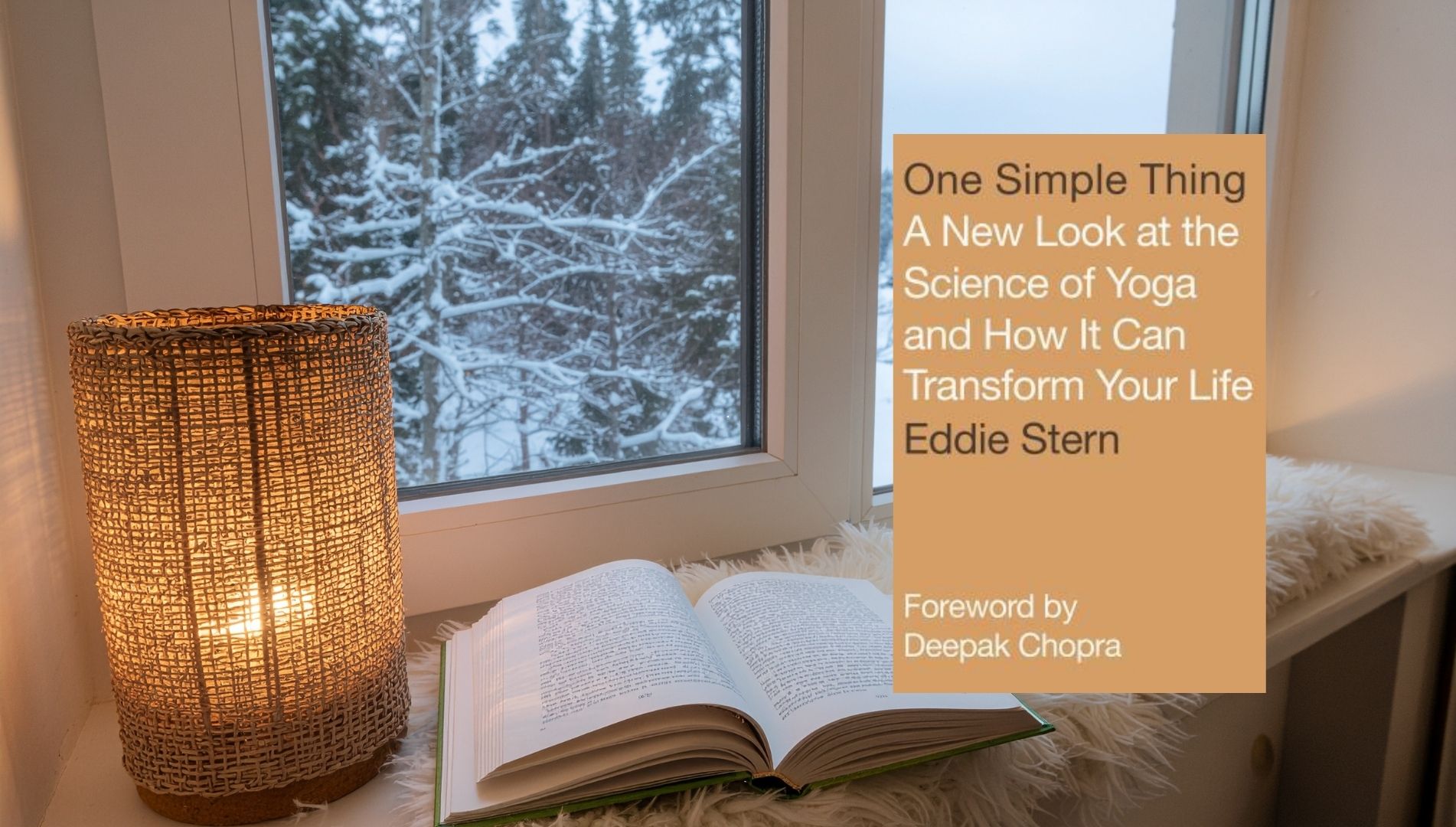
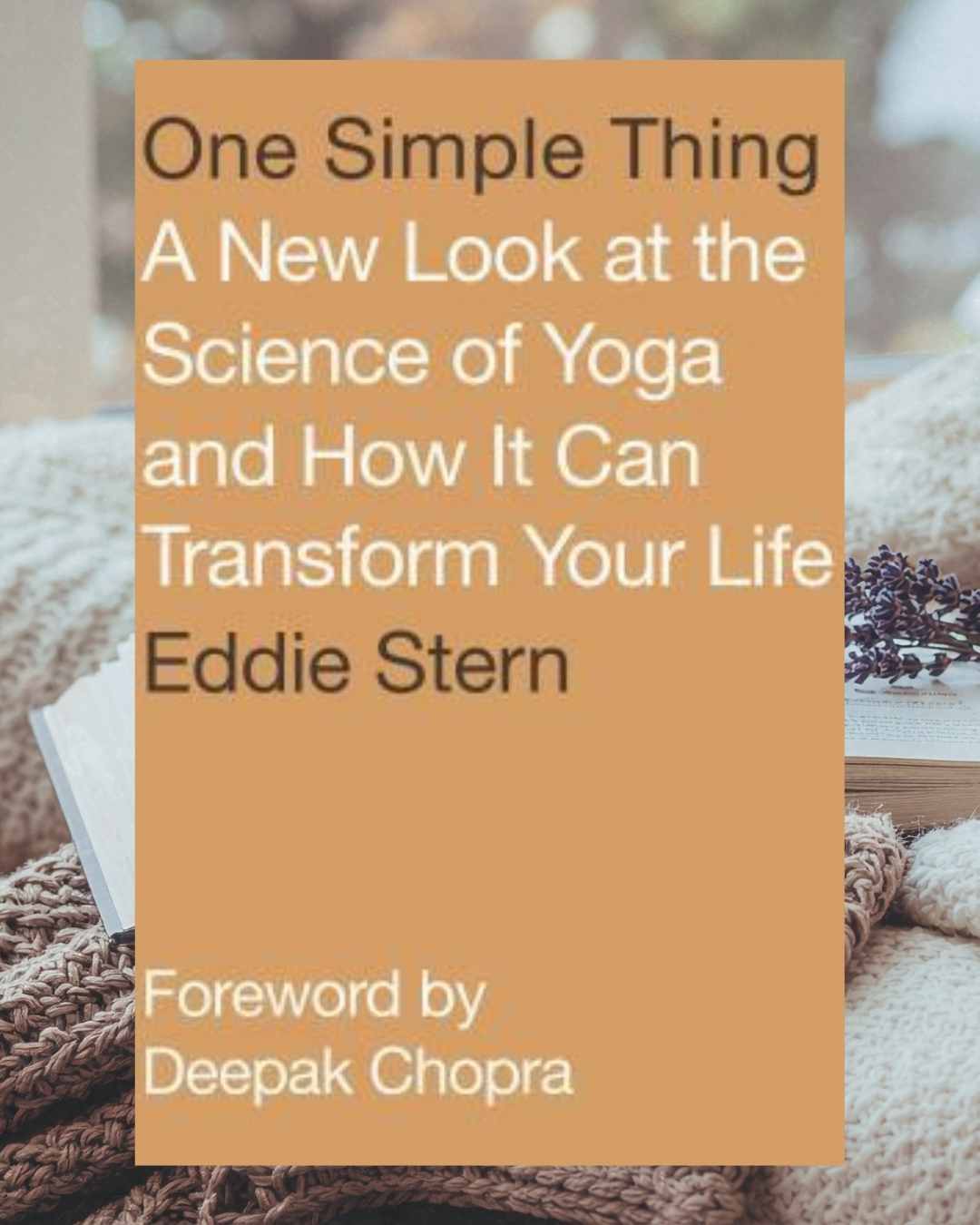
One Simple Thing · Eddie Stern

← Back to Book Club January 2026
One Simple Thing by Eddie Stern
Welcome to Simple Sundays — this month we're reading One Simple Thing: A New Look at the Science of Yoga and How It Can Transform Your Life by Eddie Stern. A rich, accessible bridge between ancient wisdom and modern neuroscience — written for teachers like us who want to understand not just what we practice, but why it works. 🧡
Monthly Reading Guide
Week 1 Jan 5–11 pp. 1–75 ~75 pages Introduction · What Is Yoga? · The Eight Limbs · The Practice of Postures

This Week's Reading

  • Introduction
  • Chapter 1: What Is Yoga?
  • Chapter 2: The Eight Limbs
  • Chapter 3: The Practice of Postures

📖 pp. 1–75 · Foundations — what yoga actually is, the full eight-limb map, and how posture practice works on the body and mind

Introduction

pp. 1–5
Stern opens with an honest and personal question: if yoga is so powerful, how does it actually work? Not as spiritual claim, but as something that can be examined and trusted. He sets the tone for the whole book — curious, humble, scientific, and deeply reverent of the tradition. This is not a book about performing yoga correctly. It's a book about why yoga does what it does.

"Yoga, at its core, is a practice for the mind — and everything else follows from that." — Eddie Stern

Reflect
Before reading further — what is your honest, working answer to "what is yoga?" How long have you held that answer?
Takeaway
Stern frames yoga as a mind practice from the very first page. Does that feel like a reframe for you, or something you already knew in your body?
Notice
After each class you teach or attend this week, pause for 30 seconds and ask: what did that practice do for the mind?
What Stayed With You
What in the introduction made you want to keep reading?
🌿 Teacher Tip
The next time a new student asks "what is yoga?" — notice what you say. This book will likely give you a more honest, more layered answer by month's end.

Chapter 1: What Is Yoga?

pp. 6–32
Stern traces yoga from its ancient roots to the present, examining how it has evolved, been misunderstood, exported, and ultimately survived with its core intact. He introduces yoga not as a physical fitness practice or spiritual religion, but as a contemplative science — a systematic method for understanding and stabilizing the mind. This chapter invites us to widen our lens considerably.

"Yoga was created as a science for liberation." — Eddie Stern

Reflect
Has the Western repackaging of yoga ever felt uncomfortable to you as a teacher — or liberating? Probably both?
Takeaway
Stern describes yoga as a contemplative science. What opens up when you hold your teaching through that lens?
Notice
Introduce yourself as a yoga teacher this week and sit with what that actually means to you in the moment you say it.
What Stayed With You
What piece of yoga's history surprised you — or landed differently than you expected?
🌿 Teacher Tip
This chapter is a quiet permission slip: you don't have to choose between the science and the tradition. They are, Stern argues, describing the same thing from different angles. Teach from both.

Chapter 2: The Eight Limbs

pp. 33–40
A brisk but essential orientation to Patanjali's Ashtanga — the eight-limbed path. Stern treats the eight limbs as a map that the whole book will fill in. Yamas, niyamas, asana, pranayama, pratyahara, dharana, dhyana, samadhi — each introduced as a living practice, not a philosophical checklist. Notably: asana is the third limb, not the whole path.

"Most modern practitioners walk into a yoga room thinking they're doing yoga. They are practicing the third of eight limbs." — Eddie Stern

Reflect
Which of the eight limbs do you feel most fluent in — and which feels like largely unexplored territory in your own practice?
Takeaway
Stern presents the eight limbs as interconnected — practicing one naturally draws you toward the others. Have you experienced this? Where?
Notice
How many of the eight limbs are present in a typical class you teach — even unnamed? Take a quiet inventory this week.
What Stayed With You
If you could bring just one additional limb more intentionally into your teaching right now, which would it be?
🌿 Teacher Tip
You don't have to teach the eight limbs explicitly to teach from them. Simply knowing the full map changes how you navigate — and students feel that depth even when it's unnamed.

Chapter 3: The Practice of Postures

pp. 41–75
The longest chapter of the first week examines asana in depth: its history, its relationship to vinyasa, and how posture practice interfaces with the nervous system. Stern shows how physical movement creates physiological change — not through fitness, but through the intimate connection between body position, breath, attention, and internal state. He also gently addresses the modern tendency to make asana the whole of yoga.

"The posture is the vehicle. The destination is stillness — not of the body, but of the mind that moves the body." — Eddie Stern

Reflect
When do you feel most alive as a teacher during a posture class — and when do you feel most distant from the reason you started?
Takeaway
Stern explores vinyasa as a relational thread between breath, movement, and attention. How does that resonate with how you sequence and cue?
Notice
Choose one posture this week and teach it as if it were the only pose in the class. Notice what you discover when you slow all the way down.
What Stayed With You
Is there anything in how Stern frames asana that you want to carry into how you open or close a posture-based class?
🌿 Teacher Tip
The next time a student apologizes for their posture, you now have Stern's full argument behind you: the shape is not the practice. What the shape makes possible — that is the practice.
💛 Student Tip
Students who come "just for the stretching" aren't wrong — they're at the beginning of the map. This chapter gives you language to expand their horizon without invalidating where they are.

👀 Looking Ahead — Week 2

Next week we go deeper — into awareness, the mind, and identity. Chapters 4, 5, and 6 ask some of the most fundamental questions: Where does awareness live? Where is the mind? Who am I? Come ready to sit with the not-knowing.

Week 2 Jan 12–18 pp. 76–145 ~70 pages The Seat of Awareness · Where Is My Mind? · Who Am I?

This Week's Reading

  • Chapter 4: The Seat of Awareness
  • Chapter 5: Where Is My Mind?
  • Chapter 6: Who Am I?

📖 pp. 76–145 · The inner landscape — consciousness, mind, and self through yogic and scientific eyes

Chapter 4: The Seat of Awareness

pp. 76–104
Where does awareness live? Stern moves through the koshas — the five layers from physical body to pure awareness — and connects them to neuroscientific models of consciousness. He bridges the ancient concept of the witnessing awareness (the seer, purusha) with modern brain science, making a compelling case that what yogis have always pointed to, science is now beginning to map.

"The body is not where awareness lives. It is where awareness lands." — Eddie Stern

Reflect
Have you experienced yourself as the witness — the one observing the practice rather than performing it? What did that feel like?
Takeaway
The koshas offer a map from the physical to the subtlest layers of self. Which layer do you tend to live in most — and which feels like unexplored territory?
Notice
In your next savasana — whether teaching or practicing — rest in the question: who is aware of this? Don't answer it. Just sit with it.
What Stayed With You
What from this chapter do you want to weave into your teaching — even wordlessly?
🌿 Teacher Tip
Invite students into the witness position without naming it: "Notice the part of you that's noticing." That single instruction is the kosha model in action — and it lands even in a beginner class.

Chapter 5: Where Is My Mind?

pp. 105–128
Stern examines the nature of mind — chitta, manas, ahamkara, buddhi — and how yogic psychology maps mental functioning with remarkable precision. He connects these ancient categories to modern neuroscience, then introduces the kleshas (the five causes of suffering) not as moral judgments but as patterns of mind that yoga directly addresses. This chapter is a quiet revelation for teachers who've sensed these patterns in their students but never had a map for them.

"The kleshas are not our failures. They are the mind's habitual strategies for survival — and yoga offers a gentler option." — Eddie Stern

Reflect
Which klesha — avidya (misperception), asmita (ego), raga (attachment), dvesha (aversion), or abhinivesha (fear of loss) — do you recognize most in yourself right now?
Takeaway
Stern frames the kleshas as survival strategies, not character flaws. How does that shift how you hold them — in yourself and in your students?
Notice
Pick one klesha and carry it as a quiet lens for the week. Notice where it arises — in the studio, in a conversation, in your own practice.
What Stayed With You
How does the yogic map of the mind compare to how you've understood your own mind? What fits, and what surprises?
🌿 Teacher Tip
You don't need to name the kleshas in class. But when a student says "I'm so frustrated with this pose," you can internally recognize dvesha — and offer the exact kind of spaciousness that addresses it. That's teaching from understanding.
💛 Student Tip
Students who suffer on the mat — who compare, judge, push, avoid — are experiencing kleshas in real time. The mat is not creating the suffering; it's revealing what was already there. That revelation is the practice.

Chapter 6: Who Am I?

pp. 129–145
The most philosophically daring chapter of the first half. Stern addresses the question of self — the ahamkara (ego-identity) that constructs the story of "me" — and how yoga practice gently loosens that construction over time. He introduces the gunas (tamas, rajas, sattva) as a practical tool for understanding states of mind and how practice can shift them. This chapter invites both humility and wonder.

"The self is not a fixed thing to be discovered. It is a process to be participated in." — Eddie Stern

Reflect
How much of your identity as a yoga teacher is fixed — and how much do you allow it to evolve as you practice and learn?
Takeaway
Where do you tend to sit: in tamas (inertia), rajas (agitation), or sattva (clarity)? And when does practice move you?
Notice
Before you teach this week, take 60 seconds to notice which guna is dominant in you. See if knowing that changes how you enter the room.
What Stayed With You
What did this chapter stir in you — about yourself, your practice, or your understanding of who you are as a teacher?
🌿 Teacher Tip
The gunas are one of the most practically useful tools you can carry into a room. A tamasic class needs energy; a rajasic one needs grounding. Sattva is what you're both moving toward and teaching from.

👀 Looking Ahead — Week 3

Next week we arrive at the Yamas and Niyamas — then move into the energetic body, breath, and practical tips for daily practice. Four chapters that together form the practical heart of the book before the grand finale.

Week 3 Jan 19–25 pp. 146–230 ~85 pages The First Two Limbs · Internal Energy · Breath as Spirit · Tips on Practice

This Week's Reading

  • Chapter 7: The First Two Limbs
  • Chapter 8: Internal Energy
  • Chapter 9: Breath as Spirit
  • Chapter 10: Tips on Practice

📖 pp. 146–230 · Ethics, energy, breath, and practice — the how of daily yoga life

Chapter 7: The First Two Limbs

pp. 146–175
The Yamas and Niyamas finally get their full treatment — not as moral rules but as nervous system outcomes. Stern's central argument: when the nervous system regulates, these ethical qualities arise naturally. Non-harming, truthfulness, contentment, self-study — not things we must achieve but things that practice gradually reveals. This reframe tends to be quietly revolutionary for yoga teachers.

"The Yamas are not the entrance requirements for yoga. They are what yoga grows in you over time." — Eddie Stern

Reflect
Which Yama or Niyama feels most like a natural expression of who you are — and which still feels like effort?
Takeaway
Stern positions the Yamas as emergent rather than imposed. How does that shift your relationship with teaching ethics in a modern, secular studio?
Notice
Choose one Yama or Niyama to carry as a lens this week. Not to practice it perfectly — just to notice where it arises or where it's absent.
What Stayed With You
If these qualities emerge from a steady practice — what does that say about what you're really doing every time you get on your mat?
🌿 Teacher Tip
You are already teaching the Yamas and Niyamas. Every time you hold a safe, honest, unhurried space — that is ahimsa and satya in action. You don't need to name them to embody them.

Chapter 8: Internal Energy

pp. 176–202
Stern turns to prana — life force — and the subtle energy body. He explores nadis (energy channels), chakras, and bandhas (energy locks) not as mystical constructs but as functional descriptions of internal physiological states, drawing careful parallels between yogic and scientific models without collapsing one into the other. This chapter rewards slow reading — it asks us to hold two very different languages for the same experience simultaneously.

"Prana is not a metaphor. It is a description of something real — something science is still learning to measure." — Eddie Stern

Reflect
How comfortable are you teaching concepts like prana, nadis, or bandhas — and has that comfort changed as you've practiced longer?
Takeaway
Stern holds both models without forcing one to validate the other. Can you hold that same dual fluency in how you teach?
Notice
Practice mula bandha in your personal practice this week — not as a technique to execute, but as an invitation to sense the internal landscape Stern describes.
What Stayed With You
What from this chapter gave you more confidence — or more curiosity — about the energetic dimension of what you teach?
🌿 Teacher Tip
When students ask "are chakras real?" you now have a more nuanced answer: the yogic tradition is describing real functional states — and science is still developing the language to meet them there. That's an honest and fascinating place to stand.

Chapter 9: Breath as Spirit

pp. 203–215
A shorter but deeply resonant chapter — Stern's most poetic writing in the book. He examines the science of breath (respiratory physiology, HRV, the vagal connection) alongside the Sanskrit understanding of prana as life force and spirit simultaneously. The breath, he argues, is the one place where voluntary and involuntary meet — where we can consciously reach into the autonomic nervous system. This is the practical magic of pranayama.

"Every exhale is a small act of letting go. Every inhale, a small act of trust." — Eddie Stern

Reflect
How central is pranayama in your own daily practice — and in what you offer students? Is there a gap there?
Takeaway
The breath sits at the intersection of voluntary and involuntary. How does that change how you think about what you're teaching every time you cue an inhale or exhale?
Notice
Try five minutes of slow, conscious nasal breathing this week — not as a technique, but as a conversation with your own nervous system. What do you feel?
What Stayed With You
What image or idea from this chapter will stay with you the next time you lead a breathing practice?
🌿 Teacher Tip
When you teach ujjayi breath, you can now say honestly: this gentle resistance on the exhale activates the parasympathetic nervous system. Students who understand the why tend to practice the how with far more care.

Chapter 10: Tips on Practice

pp. 216–230
Practical, warm, and surprisingly personal — Stern shares concrete guidance for building a sustainable daily practice. Diet, routine, timing, environment, consistency over intensity. He returns to the book's central thesis: it doesn't matter what practice you choose, or how long, or how perfectly you do it. What matters is that you do one simple thing, every day, until it becomes the thread of your life.

"All we have to do is make sure that doing a little bit of practice each day becomes a priority in our lives." — Eddie Stern

Reflect
What does your own daily practice actually look like right now — honestly? And how do you feel about that?
Takeaway
Stern champions consistency over intensity, brevity over ambition. Does that feel like freedom or compromise — and what does your reaction reveal?
Notice
Before the Zoom, identify your one simple thing — the practice from this book you want to anchor into your life. Just one.
What Stayed With You
What advice from this chapter do you most wish you could give your younger teacher-self?
🌿 Teacher Tip
The most powerful thing you can model for students is a humble, consistent personal practice — not an impressive one. Stern gives you full permission to be a practitioner first, a teacher second. He suggests that order is essential.
💛 Student Tip
When a student says they don't have time to practice, this chapter gives you something honest to offer: five minutes, every day, no exceptions. Not because it's enough — but because it builds the habit that everything else grows from.

👀 Looking Ahead — Week 4

The final week brings us to Chapter 11 — nearly a third of the entire book and its grand crescendo. The Nervous System, East and West is where everything comes together. Give yourself space for this one. It's worth it.

Week 4 Jan 26–29 pp. 231–320 ~90 pages The Nervous System, East and West · Afterword

This Week's Reading

  • Chapter 11: The Nervous System, East and West
  • Afterword

📖 pp. 231–320 · The grand synthesis — where everything comes together in the nervous system, and Stern's closing invitation to practice

Chapter 11: The Nervous System, East and West

pp. 231–308
The heart of the book — and by far its longest chapter, comprising nearly a third of the total text. Here Stern brings everything together: the autonomic nervous system, the vagus nerve, polyvagal theory, heart rate variability, resonance breathing, and the full scientific case for why yoga works. He maps the Eight Limbs directly onto nervous system function, showing that each limb addresses a specific layer of regulation. This is where East and West truly meet, and where the scope of what yoga is doing becomes undeniable.

"The nervous system is the meeting point of body, mind, and spirit. Yoga has always known this. Science is catching up." — Eddie Stern

Reflect
After reading this chapter, what feels different about the practice you've been doing — potentially for years? What has been quietly happening that you didn't have language for?
Takeaway
Stern maps each of the Eight Limbs onto nervous system function. Which connection felt most illuminating — or most surprising — for you?
Notice
Teach one class this week with this chapter in the background of your awareness. Notice how many moments you recognize as direct nervous system interventions — breath cues, stillness, grounding, drishti.
What Stayed With You
If you had to summarize what this chapter changed in how you understand yoga, what would you say?
🌿 Teacher Tip
You now have the full scientific architecture behind every class you teach. You don't need to explain it to students — but knowing it changes the confidence, the intention, and the presence you bring to the room. That is teaching from the inside out.

Afterword

pp. 309–320
Stern closes gently, returning to the simplest possible invitation: practice. Not the perfect practice, not the advanced practice — just the one you show up for. The afterword is an open door rather than a conclusion, leaving us with the quiet reminder that the transformation yoga promises is not ahead of us. It is already underway, every time we begin again.

"Practice, and all is coming. Not someday. Now. Each time you begin again." — Eddie Stern

Reflect
What is the one simple thing you're taking from this book — into your practice, your teaching, or your daily life?
Takeaway
Stern ends not with answers but with an open door. What question are you leaving this book with — and are you comfortable sitting with it?
Notice
In the days before our Zoom, notice what has quietly shifted in you since page one. You don't need to name it fully. Just feel it.
What Stayed With You
If you were to describe this book to a non-yogi friend in three sentences, what would you say?
🌿 Teacher Tip
Bring Stern's closing into your classes this week: "Whatever brought you here today — that impulse is the practice. It began before you unrolled your mat." Let the whole book live in that one sentence.

✨ You've finished One Simple Thing. Come to our Zoom with your one thing — one shift, one question, one moment from the reading that found you. That's enough. That's everything. 🧡

Join Our Zoom Gathering

Two sessions — attend one or both

Thursday
8:30 pm
January 29, 2026
Sunday
8:00 pm
February 1, 2026
Join on BookClubs