📚 This Week's Reading
- Prefacepp. 10–12
- Skywoman Fallingpp. 14–19
- The Council of Pecanspp. 20–28
- The Gift of Strawberriespp. 29–37
- An Offeringpp. 38–42
- Asters and Goldenrodpp. 43–49
- Learning the Grammar of Animacypp. 50–58
- Maple Sugar Moonpp. 60–66
- Witch Hazelpp. 67–74
- A Mother's Workpp. 75–87
Preface
pp. 10–12
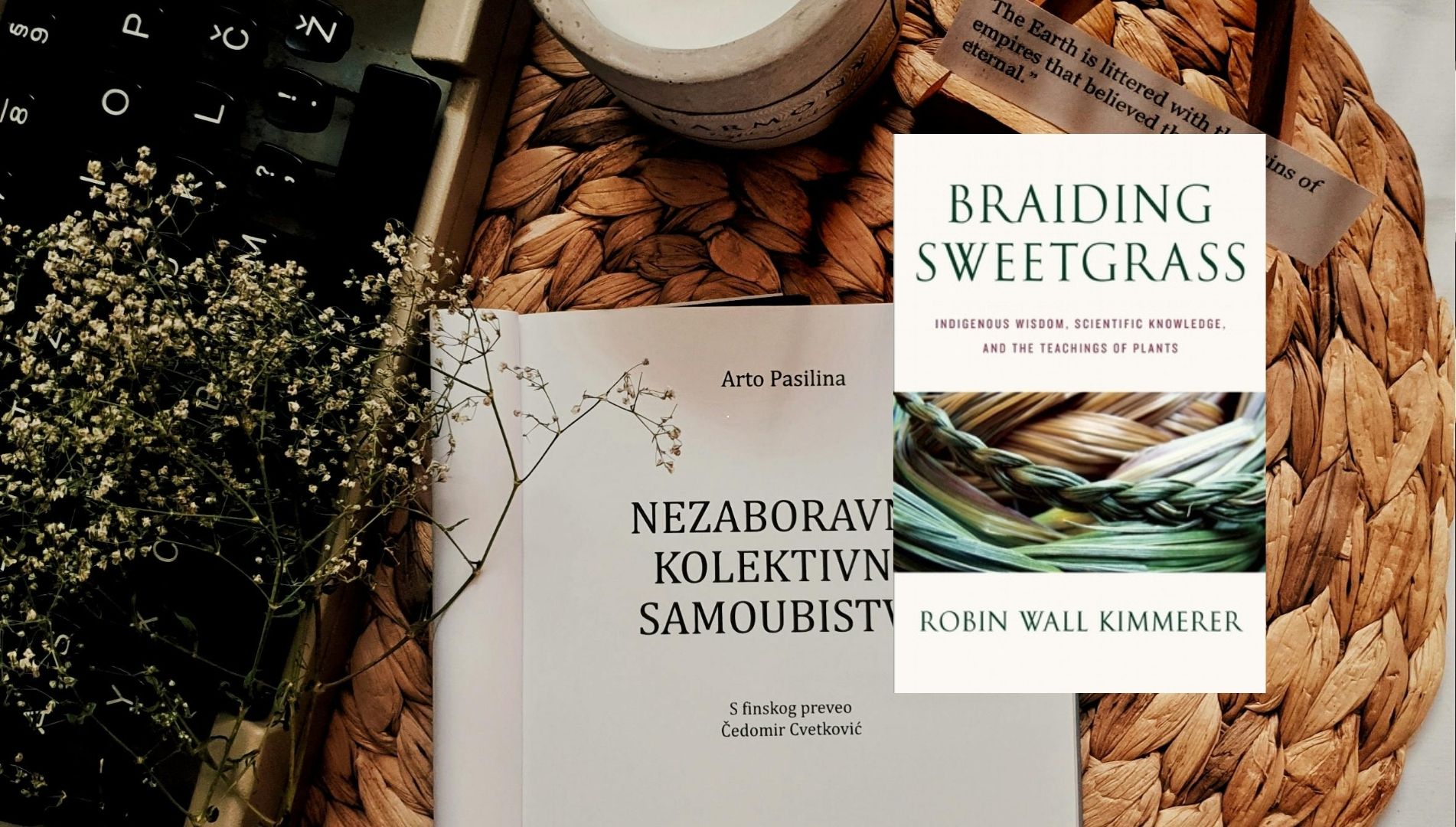
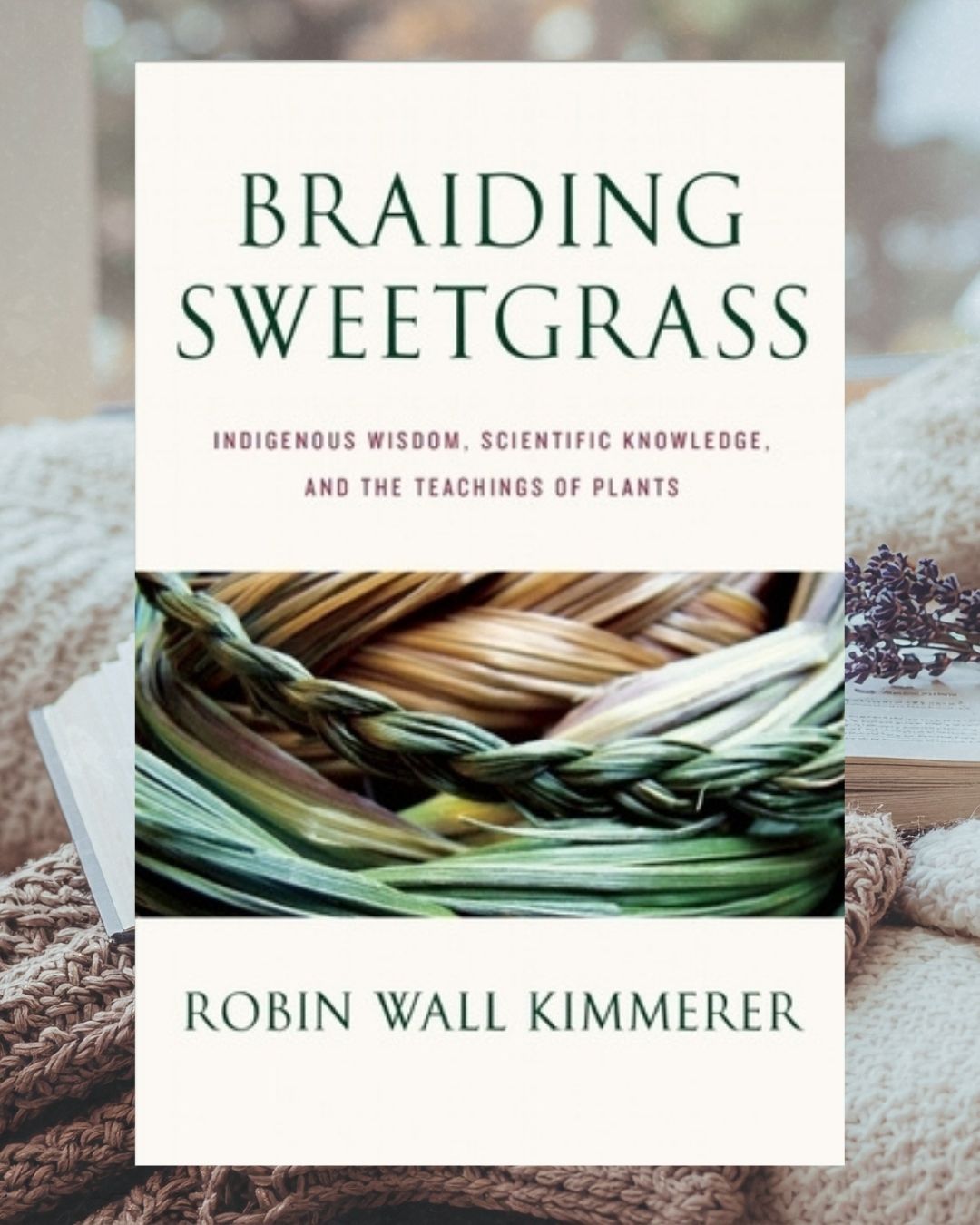
Kimmerer opens with an invitation: hold the end of the sweetgrass while she braids. The book, she tells us, is woven from three strands — indigenous ways of knowing, scientific knowledge, and personal story. A braid requires both tension and another set of hands. The braid itself is the metaphor for what she hopes we'll find: a way to heal our broken relationship with the living world.
"This braid is woven from three strands: indigenous ways of knowing, scientific knowledge, and the story of an Anishinabekwe scientist trying to bring them together in service to what matters most."
Reflect
What are the three strands that make up your own way of knowing and teaching? Where do they support each other — and where do they pull?
Takeaway
A braid requires tension and another set of hands. Where in your life are you trying to do alone what is meant to be done together?
Notice
Before anything you create this week — a class, a meal, a conversation — pause and ask: which strands am I braiding right now?
What Stayed With You
What image or phrase from the Preface is still turning over in you?
🌿 Teacher Tip
The braid as metaphor is perfect for class theming. Try opening with: "We're weaving three things today — breath, movement, and awareness. None of them work alone."
Skywoman Falling
pp. 14–19
Kimmerer retells the Potawatomi creation story: Skywoman falls from the Skyworld, is caught by geese, and carried to a great turtle's back. Every animal attempts to dive for mud — even tiny Muskrat, who gives his life bringing up a small handful. From that mud, Turtle Island grows through Skywoman's dance of gratitude. Kimmerer then sets this beside the story of Eve — same species, same earth, two entirely different relationships with the land.
"Becoming indigenous to a place means living as if your children's future mattered, to take care of the land as if our lives, both material and spiritual, depended on it."
Reflect
Skywoman creates through gratitude and dance. What does your creative act look like when it springs from gratitude rather than urgency or obligation?
Takeaway
Muskrat gave everything he had — and it was just enough. When have you offered the small thing you had, and found it was exactly what was needed?
Notice
This week, notice who and what catches you when you fall. What is your Turtle Island — the thing that holds you when you're spinning?
What Stayed With You
Kimmerer asks whether we can become "native to this place" again. What would that look like in your daily life?
🌿 Teacher Tip
Skywoman dancing her gratitude as the earth grows beneath her feet is a powerful image for grounding sequences. Try cueing: "The earth rises to meet you — because it always has."
🧘 Student Tip
This story reminds us we didn't arrive in this world alone — we were caught, held, carried. Let that land in your body this week before class begins.
The Council of Pecans
pp. 20–28
Kimmerer traces her family's forced displacement — the Trail of Death, removal to Oklahoma, the allotment era — through the lens of pecan trees. Pecan trees don't fruit alone: they synchronize across entire regions in a phenomenon called mast fruiting, communicating through pheromones and underground fungal networks. The trees prosper only when they act as a collective. The teaching, both botanical and personal, arrives with quiet weight: all flourishing is mutual.
"Through unity, survival. All flourishing is mutual. Soil, fungus, tree, squirrel, boy—all are the beneficiaries of reciprocity."
Reflect
The pecan trees only thrive when they act together. Where in your community have you seen collective flourishing? Where has isolation worked against it?
Takeaway
Trees share surplus through underground fungal networks — giving most to whoever needs it most. What does it mean to redistribute abundance in your own circle?
Notice
This week, look for the mycorrhizal networks in your life — the invisible connections that are actually doing the work of holding things together.
What Stayed With You
The leaders chose individual land over communal land — and most of it was lost within a generation. What does this history ask of us now?
🌿 Teacher Tip
"All flourishing is mutual" is one of the most potent lines in this book. It's quietly radical in a community-based teaching practice. Consider threading it into a class on partner work, assists, or savasana: "You don't restore alone."
The Gift of Strawberries
pp. 29–37
Kimmerer reflects on childhood summers gathering wild strawberries in upstate New York — berries that arrived freely, like gifts. Drawing on scholar Lewis Hyde, she explores the difference between a gift economy and a commodity economy: gifts create ongoing relationship and obligation to reciprocate, while commodities end the moment money changes hands. The strawberry, ode min in Potawatomi — the heart berry — was born of Skywoman's daughter's body.
"When all the world is a gift in motion, how wealthy we become."
Reflect
Think of something you receive regularly that you treat as a commodity. What might shift if you received it as a gift — with all the obligation, attention, and gratitude that implies?
Takeaway
A gift creates ongoing relationship. What is the gift your teaching practice has given you — and how do you give it back?
Notice
This week, name three things in your daily life that are gifts from the earth. Practice receiving them as such — with attention, not just consumption.
What Stayed With You
Kimmerer says sweetgrass cannot be sold and still retain its essence for ceremony. What in your life loses something essential the moment it becomes transactional?
🌿 Teacher Tip
The idea that teaching is a gift — not a service — can quietly reorient everything about how we show up in the room. This week, notice the difference between teaching as transaction and teaching as offering.
🧘 Student Tip
Your presence in class is a gift to the room — not the poses, not the performance, but your actual attention and aliveness. Try offering that consciously this week.
An Offering
pp. 38–42
Every morning of Kimmerer's childhood camping trips, her father would pour the first cup of coffee onto the earth: "Here's to the gods of Tahawus." Years later, she learns it began practically — to clear the coffee grounds from the spout — and became something sacred. This quiet essay asks how ceremony is born, how the mundane becomes holy, and how even a homemade ritual, however secondhand, can hold genuine belonging.
"That is the power of ceremony: it marries the mundane to the sacred. The water turns to wine, the coffee to a prayer."
Reflect
What small daily act has become ceremony in your life — something that started ordinary and grew into meaning?
Takeaway
Kimmerer's father says the offering was "a kind of respect. A kind of thanks." What do your daily rituals communicate — to yourself, to the people around you, to the land?
Notice
Before your first cup of tea or coffee today, pause. Offer something — a breath, a word, a moment of attention — before you take.
What Stayed With You
"The land knows you, even when you are lost." What does it feel like to sit with that?
🌿 Teacher Tip
Your class opening — whatever form it takes — is an offering. This essay invites you to teach it that way. Even a three-breath centering is ceremony when it's held as such.
Asters and Goldenrod
pp. 43–49
On her first day as a botany student, Kimmerer tells her adviser she wants to study why asters and goldenrod are so beautiful together. He tells her that isn't science. This chapter is her long answer: a weaving of color theory, bee ecology, optical science, and indigenous knowing. Purple and yellow are complementary colors — each makes the other more vivid. Science and traditional knowledge, she suggests, are the same.
"Science and art, matter and spirit, indigenous knowledge and Western science—can they be goldenrod and asters for each other? When I am in their presence, their beauty asks me for reciprocity, to be the complementary color, to make something beautiful in response."
Reflect
What two ways of knowing do you hold in your teaching — anatomy and intuition, tradition and innovation, structure and freedom? Do they enrich each other or compete?
Takeaway
Kimmerer says she was taught the names of plants but not their songs. What is the difference between knowing something's name and knowing its song?
Notice
This week, find one pairing — in nature or in your own life — that is more beautiful together than apart. Sit with the question: why?
What Stayed With You
When have you been told your question wasn't the right kind of question? How did you find your way back to it?
🌿 Teacher Tip
Yoga anatomy and yoga philosophy are asters and goldenrod — neither is enough alone. This week, try pairing a precise technical cue with a felt-sense image, and see what lights up in your students.
Learning the Grammar of Animacy
pp. 50–58
Kimmerer stumbles upon a word that doesn't exist in English: Puhpowee — the force that causes mushrooms to push up from the earth overnight. In Potawatomi, most beings are animate; you say "who" when speaking of rivers, rocks, and apple trees. The language encodes a world alive with personhood and kinship. Kimmerer learns Potawatomi on Post-it notes, one stubborn verb at a time — and discovers that language is not just description, but moral orientation.
"The language reminds us, in every sentence, of our kinship with all of the animate world."
Reflect
What would shift if you referred to the tree outside, the river nearby, the soil underfoot as "who" rather than "it"? Try it for one day this week.
Takeaway
Kimmerer says English makes it easy to exploit what we call "it." What language do you use in teaching — and what does it invite students to feel about their own bodies?
Notice
Practice animacy this week. Speak to one non-human being as if it has interiority — the plant on your windowsill, the wind, the light. Notice what shifts.
What Stayed With You
"You don't have to speak it here," the elder said, pointing to his lips. "If you speak it here," — he touched his heart — "they will hear you." What lives in you that you haven't yet found words for?
🌿 Teacher Tip
Language is pedagogy. Puhpowee — the force that causes things to rise — is a beautiful invisible cue for any upward movement: inhale, backbend, standing. Name the force, not just the shape.
🧘 Student Tip
Your body is animate — not a machine to optimize, not an object to correct. A living being with its own intelligence. Try listening to it this week as you would a wise teacher.
Maple Sugar Moon
pp. 60–66
Kimmerer and her daughters tap the great sugar maples surrounding their old farmhouse and spend cold March nights boiling sap down to syrup. Woven through the domestic detail is the Anishinaabe story of Nanabozho, who diluted the syrup so that people would have to work for it — a reminder that gifts from the earth require our labor and gratitude to be fully realized. The chapter ends with twin maples planted for a wedding, still giving shade across generations.
"It is our work, and our gratitude, that distills the sweetness."
Reflect
Nanabozho made the sap thin so that people would participate in its transformation. Where in your practice have you found that the effort itself is the gift?
Takeaway
The twin maples were planted by people who would never sit in their shade. What are you planting now for someone you'll never meet?
Notice
This week, do one thing slowly that could be done quickly. Notice what changes when you participate in the full process rather than shortcutting to the result.
What Stayed With You
Kimmerer sits by the fire alone at midnight, tending the flame. When do you tend something in the dark, not knowing whether it will work?
🌿 Teacher Tip
"Syrup is summer sunshine flowing in golden streams." Use this image in restorative or yin teaching — the long hold is the boiling down, the sweetness comes at the end. The practice distills you.
Witch Hazel
pp. 67–74
Told through the eyes of Kimmerer's daughter, this essay introduces Hazel Barnett — an elderly Kentucky neighbor rooted in the old plant ways, who left her childhood home when her son fell ill and never returned. Kimmerer's mother throws a surprise Christmas party to bring Hazel home one more time. The witch hazel tree, blooming alone in November when every other flower has gone gray, becomes Hazel's philosophy of living.
"There ain't hardly no hurt the woods don't have medicine for."
Reflect
Hazel Barnett passed on the old plant ways through relationship, not institution. Who in your life has taught you something essential that wasn't in a book?
Takeaway
Witch hazel blooms in November — a scrap of color when everything else has closed. What is your November medicine? What do you offer when the season doesn't seem to call for it?
Notice
This week, look for the unexpected small thing that lightens your heart. Name it. Let it do its work.
What Stayed With You
Kimmerer's mother throws a party not because it's convenient, but because Hazel needed to come home. When have you created home for someone who was displaced from theirs?
🌿 Teacher Tip
This essay is about the medicine of presence — showing up in November, when the season doesn't call for it. Your class on a hard Tuesday when no one wants to be there might be the witch hazel moment your students need most.
A Mother's Work
pp. 75–87
Single mother of two, Kimmerer spends years rehabilitating a neglected farm pond so her daughters can swim in it. The labor teaches her ecology, ethics, and the slowly expanding definition of what "good mother" means. She rakes algae, rescues tadpoles, cuts willows, plants sweetgrass at the edge. The pond spirals outward: her water drains to the creek, to the lake, to everywhere downstream. Being a good mother, she realizes, doesn't end with her own children.
"Transformation is not accomplished by tentative wading at the edge."
Reflect
Kimmerer wades in fully — gives herself to the task. Where in your life are you still wading tentatively? What would it feel like to just go in?
Takeaway
Her understanding of care spirals outward to encompass all of life. How has your own understanding of what you are responsible for expanded over time?
Notice
This week, do one act of care for something outside your immediate circle — a neighbor, a patch of earth, a community space. Notice how it feels to extend your reach.
What Stayed With You
"A good mother grows into a richly eutrophic old woman." What does this image stir in you?
🌿 Teacher Tip
Restoration is never finished — it just changes from one task to the next. This is a beautiful frame for a teaching practice: you are not trying to perfect your students. You are tending them, season by season.
🧘 Student Tip
You are both the pond and the one doing the raking. Restoration begins from the inside. What has been getting murky that could use some patient, gentle tending?
🌱 Looking Ahead — Week 2
Next week we complete Tending Sweetgrass with two quietly moving essays — The Consolation of Water Lilies and Allegiance to Gratitude — then move into the rich harvest of Picking Sweetgrass. Kimmerer will take us into the bean fields, the Three Sisters garden, the black ash basket-makers, and the sweetgrass meadows, asking throughout what it means to take from the earth with care and true reciprocity. Reading: pp. 88–168.